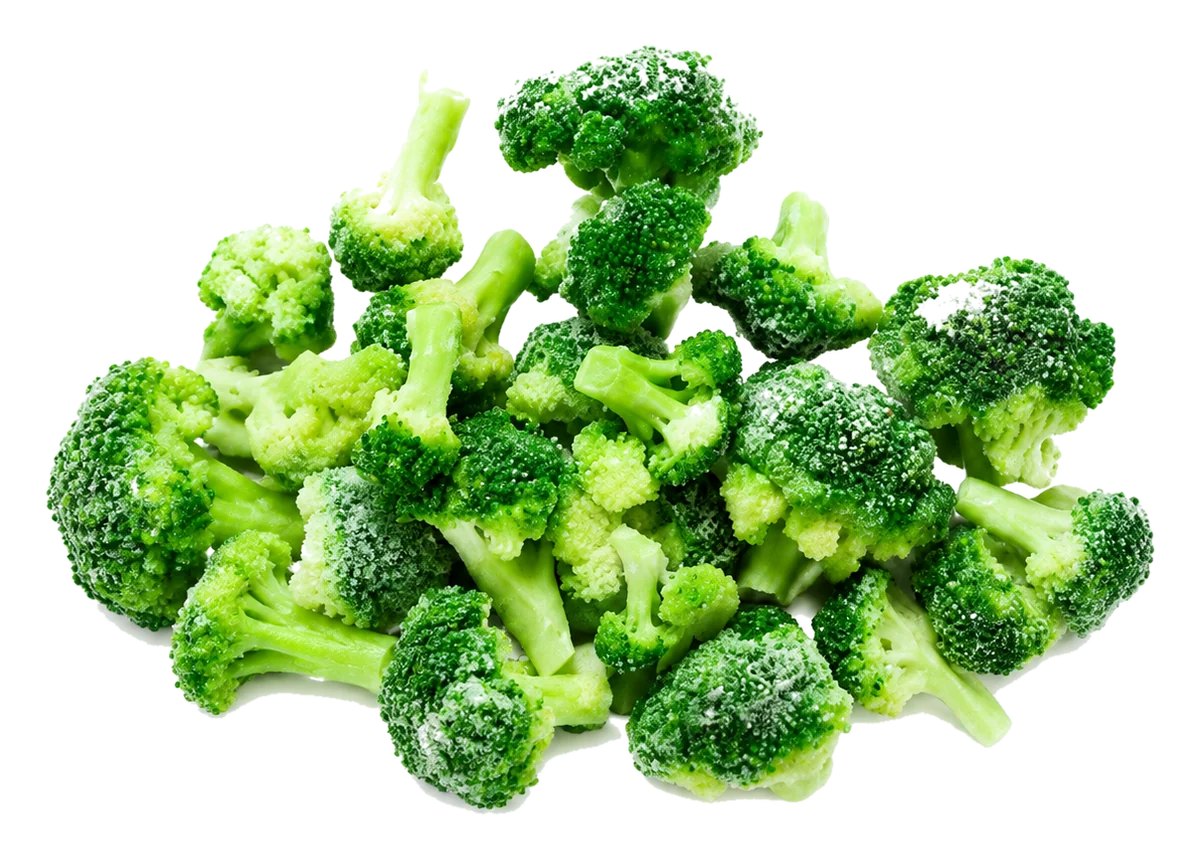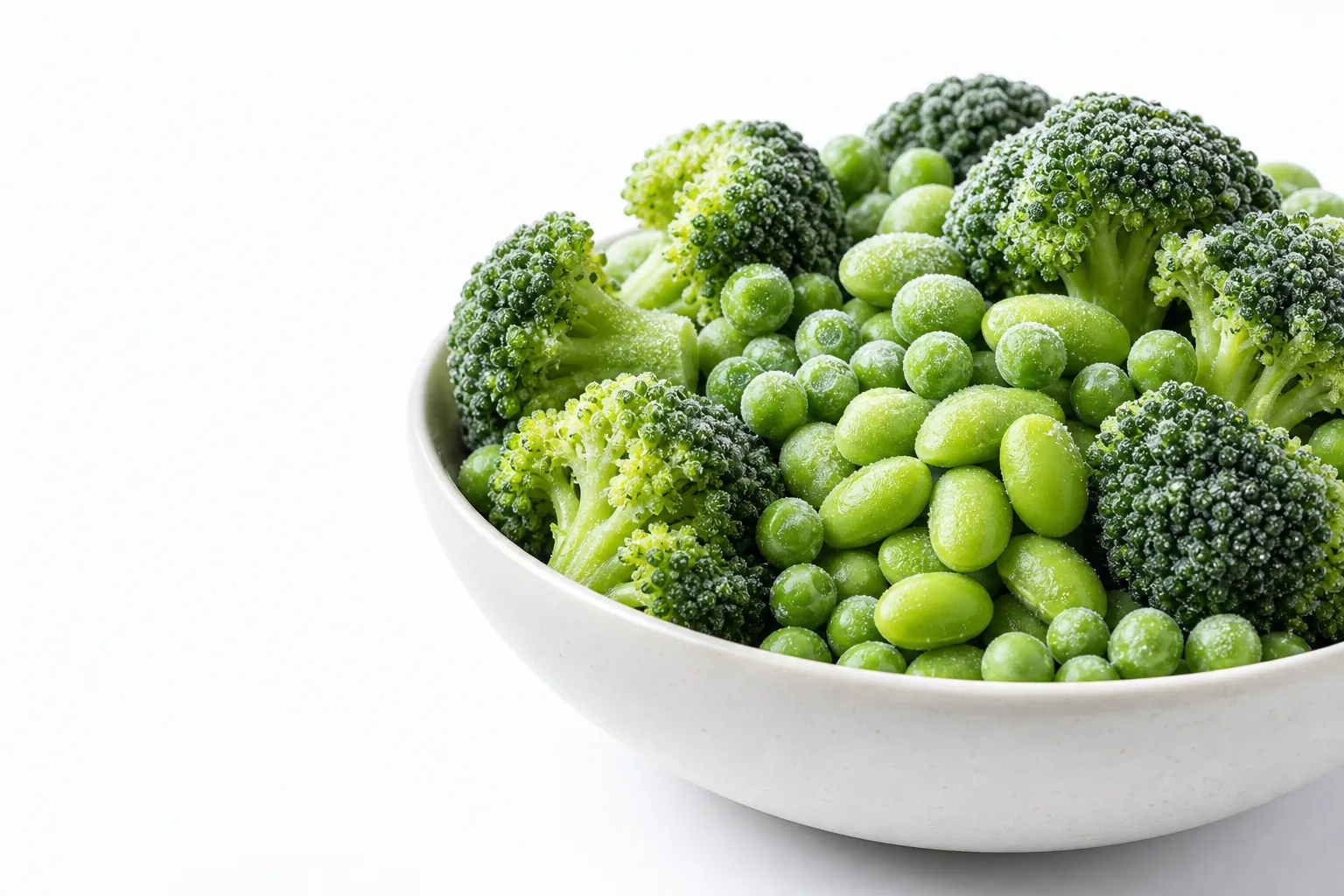
Frozen vegetables are sometimes discussed as a compromise when fresh produce is unavailable. For professional buyers, that framing is too narrow. A well-specified frozen vegetable program can offer dependable availability, controlled portions and predictable preparation while retaining meaningful nutritional value. The important qualifier is “well specified”: outcomes depend on the crop, maturity, pre-treatment, freezing process, packaging, storage time and cold-chain discipline.
The evidence does not support a universal claim that frozen vegetables are always nutritionally superior to fresh vegetables. It does support a more useful conclusion: frozen products can be nutritionally comparable for many measured components, and they can solve operational problems that fresh produce cannot solve as consistently. Buyers should evaluate those advantages alongside product-specific quality data rather than rely on a slogan.
1. Nutritional value can remain competitive with fresh produce
One of the strongest reasons to reconsider frozen vegetables is that the nutritional difference from fresh produce is often smaller—and more variable—than common assumptions suggest. In a University of California, Davis study, corn, carrots, broccoli, spinach, peas and green beans were divided into fresh and frozen treatments and assessed for minerals, fibre and total phenolics over storage. For the majority of commodities and analytes, the researchers found no significant difference between fresh and frozen samples.[1] That finding is specific to the tested foods and compounds; it is not proof that every vitamin in every frozen vegetable remains unchanged.
A separate industrial-process study followed asparagus, green beans and zucchini through blanching, freezing, frozen storage and cooking. The authors concluded that, when industrial freezing was performed well, the cooked frozen vegetables did not have lower overall nutritional value than the fresh comparison. Results still varied by vegetable and compound, and colour changes were not identical across products.[2] For buyers, the practical lesson is to ask which nutrient, product and storage period a claim refers to instead of accepting a broad “fresh versus frozen” statement.
2. Freezing creates a defined preservation point
Fresh produce continues to respire and change after harvest. Its commercial condition is influenced by harvest maturity, field heat removal, time in transit, humidity and handling. Quick freezing creates a different supply model: vegetables are prepared and preserved at a defined processing stage, then maintained under a frozen cold chain. Codex defines quick-frozen vegetables as appropriately prepared vegetables that pass rapidly through the range of maximum crystallisation and reach -18°C at the thermal centre after stabilisation.[3]
That defined preservation point can make planning easier, but it is not a guarantee of unlimited quality. The US Food and Drug Administration notes that food held properly at 0°F (-18°C) remains safe, while tenderness, flavour, aroma, juiciness and colour can still deteriorate over time.[4] Storage duration, temperature fluctuation, dehydration and packaging integrity therefore belong in a buyer's specification and supplier review.
3. Year-round availability can reduce seasonal procurement pressure
Frozen programs allow processors to convert seasonal harvests into inventory that can be released across a longer sales window. For an importer or foodservice distributor, this can reduce dependence on the short physical life of fresh produce and make annual product programs easier to schedule. The advantage is especially relevant for standard cuts such as broccoli florets, diced spinach, whole green beans, peas and calibrated vegetable blends.
Year-round availability should still be tested rather than assumed. Buyers need to understand crop calendars, factory capacity, raw-material sourcing, contracted stock, production lead time and contingency plans. Frozen inventory can smooth seasonality, but it cannot eliminate crop failure, energy disruption, port congestion or cold-store constraints. A dependable program combines preserved product with transparent supply planning.
4. Portion control and preparation can be more predictable
Many IQF vegetables are free flowing, allowing individual units to be separated while frozen rather than supplied as one solid block. Codex recognises this IQF condition in its quick-frozen vegetable standard.[3] In kitchens and manufacturing lines, that can support measured dispensing, partial-bag use and repeatable recipe formulation. Predefined cuts and calibrations can also reduce the variation created by trimming whole fresh vegetables on site.
The operational value depends on the application. A restaurant that needs raw crunch or a whole-market presentation may still prefer fresh produce. A soup, ready meal, sauce, side dish or industrial blend may benefit more from frozen, pre-cut inputs. The relevant comparison is not simply purchase price per kilogram; it is usable yield, preparation labour, portion accuracy, cooking performance and the value of consistency in the final product.
5. Frozen formats may help reduce avoidable waste
Longer usable storage and the ability to remove only the required quantity can reduce the risk that an opened purchase spoils before use. Survey-based research provides support for this direction, although it should be interpreted carefully. An Austrian household study reported substantially more self-reported waste from comparable fresh purchases than from frozen purchases.[5] A Dutch study also found that most evaluated frozen equivalents were associated with smaller waste quantities than fresh or ambient equivalents.[6]
Those studies concern households, not commercial kitchens, and survey results do not prove that every buyer will achieve the same reduction. Waste performance depends on forecasting, stock rotation, pack size, freezer management and staff practice. Businesses should measure their own purchase-to-plate or purchase-to-production yield. Frozen products create useful conditions for waste control; management determines whether that potential is realised.
6. Food safety still depends on the complete system
Freezing is preservation, not sterilisation. FDA guidance states that freezing stops bacteria from growing but does not kill most bacteria.[4] Frozen vegetables therefore still require hygienic agricultural and factory controls, appropriate blanching where used, environmental monitoring, validated microbiological criteria, protected packaging, temperature control and preparation according to the product's intended use.
A buyer should distinguish ready-to-cook from ready-to-eat status and confirm that labelling and cooking instructions match the product. Supplier approval should include the factory's food-safety system, traceability, contaminant controls, allergen management where relevant, test plans and incident response. Frozen temperature is one control in a larger assurance chain.
7. The strongest business case is product-specific
The best reason to choose frozen vegetables is not that frozen is universally better. It is that the format can combine preserved seasonal quality with repeatable cuts, measurable portions and a longer planning horizon. Those benefits are most valuable where the final application tolerates or benefits from cooking, mixing or further processing.
Before approving a program, define the vegetable variety, cut, calibration, defect tolerances, blanching status, sensory target, packaging, net weight, storage life, microbiological requirements and destination-market rules. Request representative samples and compare cooked performance under the buyer's real process. Evidence should narrow uncertainty; a disciplined specification turns that evidence into a commercial result.
REFERENCES
Sources
- Bouzari, A.; Holstege, D.; Barrett, D. M. (2015). “Mineral, fiber, and total phenolic retention in eight fruits and vegetables: a comparison of refrigerated and frozen storage.” Journal of Agricultural and Food Chemistry. DOI: 10.1021/jf504890k.Open source
- Mazzeo, T. et al. (2015). “Impact of the industrial freezing process on selected vegetables—Part II: Colour and bioactive compounds.” Food Research International. DOI: 10.1016/j.foodres.2015.05.036.Open source
- Codex Alimentarius Commission (2015; amended 2022). “Standard for Quick Frozen Vegetables, CXS 320-2015.” FAO/WHO.Open source
- U.S. Food and Drug Administration (accessed 2026). “Are You Storing Food Safely?.” FDA Consumer Update.Open source
- Martindale, W. (2017). “The impact of food preservation on food waste.” British Food Journal. DOI: 10.1108/BFJ-02-2017-0114.Open source
- Janssen, A. M. et al. (2017). “Fresh, frozen, or ambient food equivalents and their impact on food waste generation in Dutch households.” Waste Management. DOI: 10.1016/j.wasman.2017.05.010.Open source
This article is written for professional food buyers and does not provide individual nutrition, medical or legal advice.