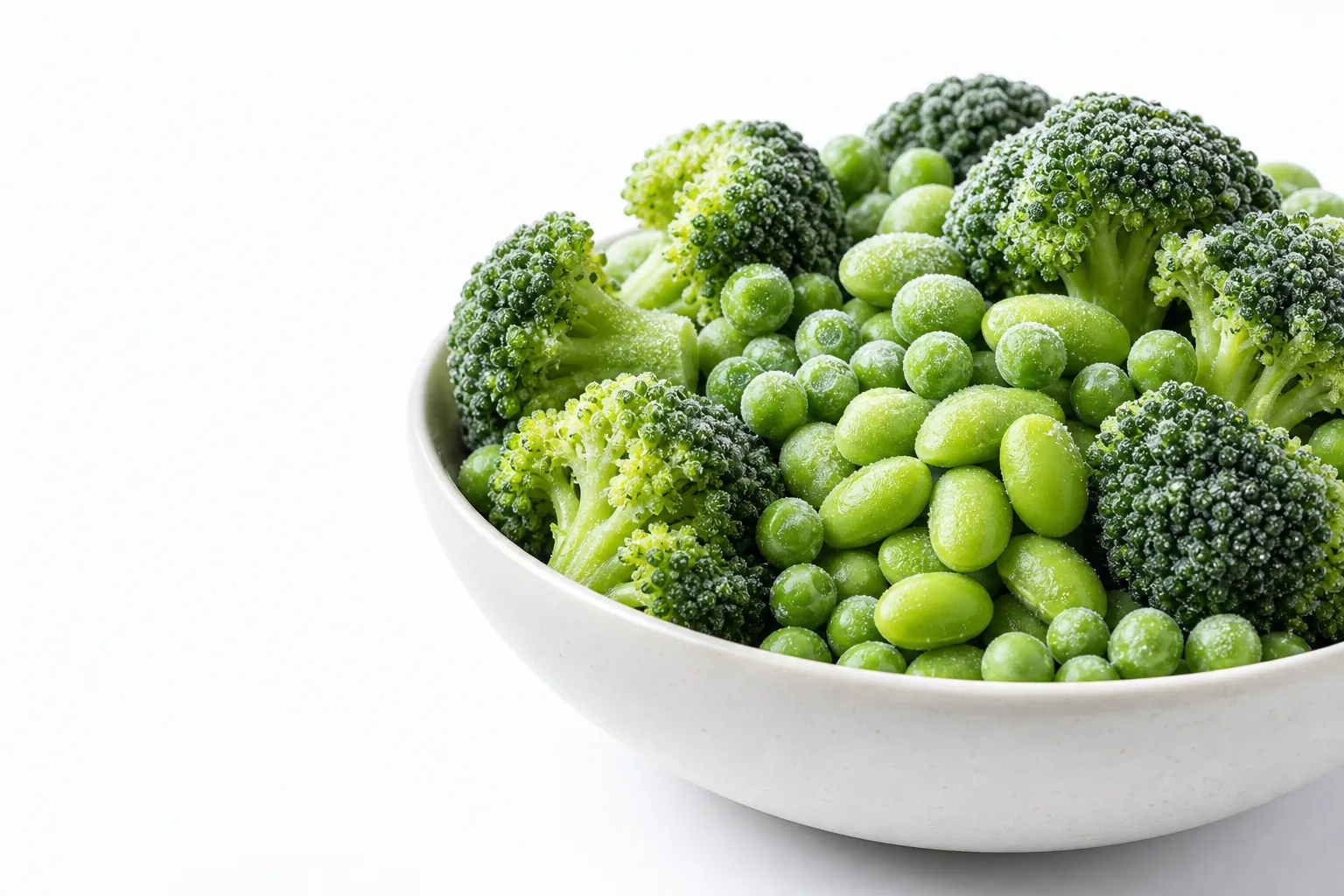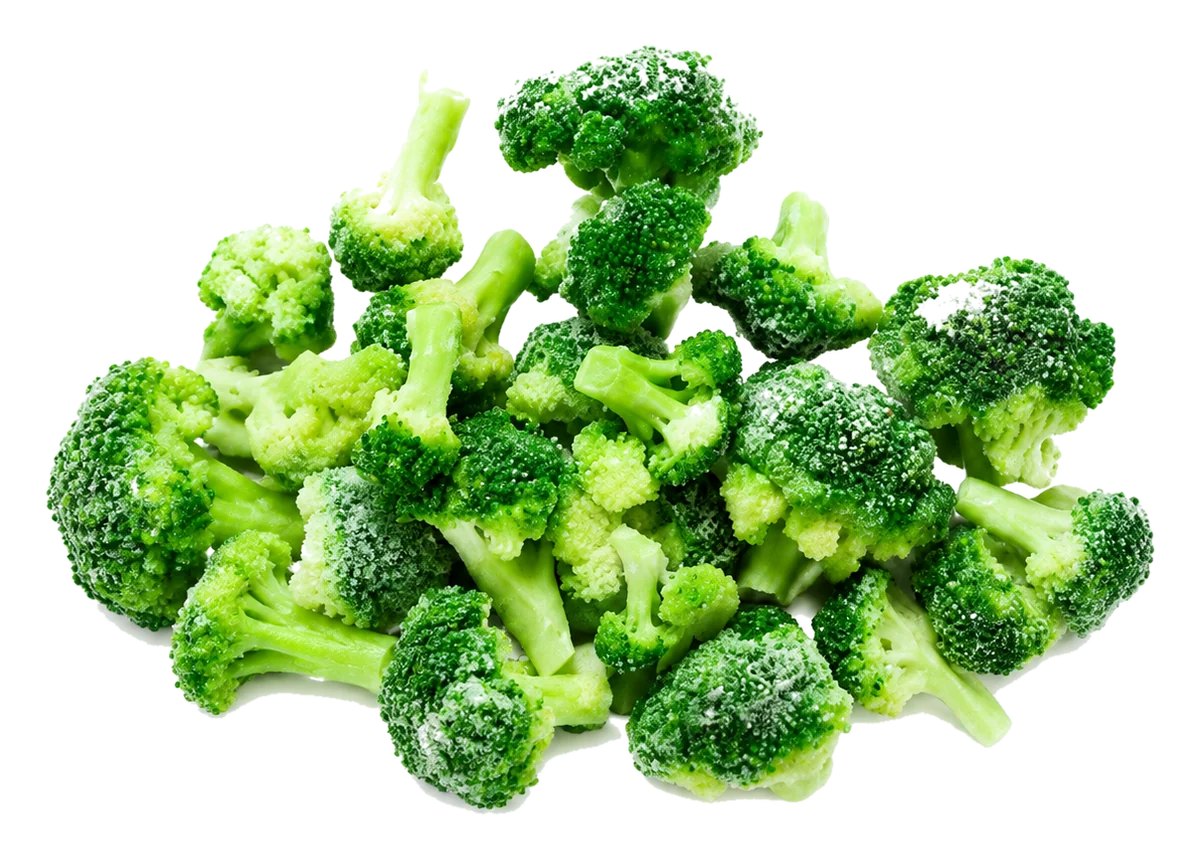
Individual quick freezing, usually shortened to IQF, is widely used for vegetables because it can produce separate, free-flowing pieces that are convenient to pack, portion and process. The initials are familiar; the technical meaning is often blurred. IQF is not simply a marketing synonym for “frozen,” and it does not by itself prove premium raw material, microbiological safety or perfect texture.
For buyers, understanding the process helps convert a broad product name into a useful specification. Freezing rate, vegetable preparation, blanching, piece size, equipment loading, final core temperature, packaging and cold-chain stability all influence the result. IQF should therefore be evaluated as a controlled production and distribution system.
1. What “quick frozen” means under Codex
The Codex Standard for Quick Frozen Vegetables provides a useful international reference. It describes vegetables prepared from sound raw material through operations that may include washing, peeling, grading, cutting and blanching or enzyme deactivation. The freezing operation must pass rapidly through the range of maximum crystallisation and continue until the thermal centre reaches -18°C after thermal stabilisation.[1]
Codex also notes that quick-frozen vegetables may be free flowing, meaning the individual units are not stuck together or blocked to the extent that they cannot be separated in the frozen state.[1] This is the practical feature most buyers associate with IQF. A bag of peas can be partially dispensed; broccoli florets can be counted or weighed; a blend can be dosed without thawing an entire block.
2. Why freezing rate affects vegetable structure
Vegetables contain a high proportion of water. During freezing, water forms ice crystals inside and outside plant cells. Large crystals and crystal growth can disrupt cell structures, contributing to drip loss or a softer texture after thawing and cooking. Faster passage through the key crystallisation range generally encourages smaller crystals and less time for crystal growth.
An experimental study of mushroom, green cauliflower, navy bean and pea pod sap used cryomicroscopy to examine this relationship. As the tested freezing rate increased from 1.0 to 10.0°C per minute, measured crystal size fell from approximately 26 to 3 micrometres.[2] The experiment supports the mechanism behind quick freezing, but those numbers should not be applied as a universal factory benchmark: commercial products differ in geometry, composition, airflow, load depth and equipment.
3. Preparation begins before the freezer
The freezer cannot improve poor raw material. Variety, maturity, harvest condition, delay before processing and initial sorting influence colour, flavour, fibre and defect levels. Vegetables are typically washed and graded, then cut or calibrated to the required style. Piece size matters because it changes heat transfer and therefore freezing time.
Many vegetables are blanched before freezing to reduce enzyme activity that could otherwise continue to affect colour, flavour and quality during storage. Blanching is a controlled heat treatment, not a neutral step. It can improve storage stability while also changing heat-sensitive nutrients or texture. Research following industrially processed asparagus, green beans and zucchini found that outcomes varied by compound and vegetable, reinforcing the need for product-specific validation.[3]
4. Separation is a performance characteristic
A free-flowing product is useful only when the pieces meet the intended specification. Broccoli may require a defined floret diameter and stalk allowance; green beans may be whole, cut or sliced; spinach may be leaf, chopped or portioned. Clumping can reflect surface moisture, incomplete freezing, pressure during storage, temperature fluctuation or thaw-refreeze exposure.
Buyers should describe acceptable free-flow performance and inspect samples directly from frozen storage. A visual test at room temperature is misleading because thawing begins immediately. Evaluation should include bag condition, loose-piece percentage where relevant, snow or ice accumulation, dehydration, breakage and the ease of dispensing the quantity needed for the real production process.
5. The cold chain preserves the work already done
Codex requires quick-frozen vegetables to be maintained at -18°C or colder throughout the cold chain, subject to permitted tolerances, and recommends handling that maintains quality through transportation, storage and distribution.[1] Its code of practice calls for cold stores designed to hold product at -18°C or below with minimal fluctuation and for temperature-controlled handling during packing and repacking.[4]
Temperature abuse can encourage recrystallisation, in which ice crystals change and grow during storage. It can also increase clumping and accelerate quality loss. A shipment arriving frozen is not, by itself, proof that the temperature history was satisfactory. Importers may specify data-loggers, loading temperature, container set point, alarm procedures and acceptance rules for temperature excursions.
6. Packaging protects against dehydration and contamination
Frozen storage slows change but does not make the product immune to its environment. Codex guidance states that packaging should protect sensory quality, limit dehydration, guard against microbial and other contamination and avoid transferring substances that could affect the food.[4] Poor seals or unsuitable moisture barriers can contribute to surface drying and freezer burn.
Packaging must also suit the buyer's handling system. Retail packs need seal integrity, accurate labelling and dependable artwork control. Foodservice and industrial packs need appropriate strength, dimensions and closure performance. The specification should define pack weight, inner and outer materials, case count, pallet pattern, coding, storage statement and any destination-market label requirements.
7. IQF is not a food-safety kill step
FDA guidance is explicit: freezing stops most bacteria from growing but does not kill most bacteria.[5] A frozen product can therefore carry hazards introduced in the field or factory. IQF status does not replace agricultural controls, potable water, hygienic zoning, sanitation, environmental monitoring, foreign-material controls, microbiological criteria or validated cooking where required.
Buyers should confirm intended use and distinguish ready-to-cook, cook-before-eating and ready-to-eat claims. They should review the factory's food-safety plan, certification scope, traceability, testing program and recall process. The strongest IQF specification connects physical product quality with the controls needed for the destination market and end use.
8. A practical IQF buyer checklist
An effective enquiry identifies the botanical product, variety if important, origin, harvest season, style, cut, calibration, blanching status, defect tolerances, sensory target, net weight, packaging, shelf life and intended application. Add microbiological, residue, contaminant and certification requirements based on the destination market rather than copying a generic list.
Request a representative production sample and test it from frozen state through the actual cooking or manufacturing process. Record loose-piece performance, cooked yield, colour, texture, flavour and defects. IQF technology creates a platform for consistency; an agreed specification and verified process determine whether the delivered product meets the buyer's needs.
REFERENCES
Sources
- Codex Alimentarius Commission (2015; amended 2022). “Standard for Quick Frozen Vegetables, CXS 320-2015.” FAO/WHO.Open source
- Wang, H.; Zhang, S.; Chen, G. (2007). “Experimental study on the freezing characteristics of four kinds of vegetables.” LWT - Food Science and Technology. DOI: 10.1016/j.lwt.2006.06.001.Open source
- Mazzeo, T. et al. (2015). “Impact of the industrial freezing process on selected vegetables—Part II: Colour and bioactive compounds.” Food Research International. DOI: 10.1016/j.foodres.2015.05.036.Open source
- Codex Alimentarius Commission (revised text). “Code of Practice for the Processing and Handling of Quick Frozen Foods, CAC/RCP 8-1976.” FAO/WHO.Open source
- U.S. Food and Drug Administration (accessed 2026). “Are You Storing Food Safely?.” FDA Consumer Update.Open source
This article is written for professional food buyers and does not provide individual nutrition, medical or legal advice.