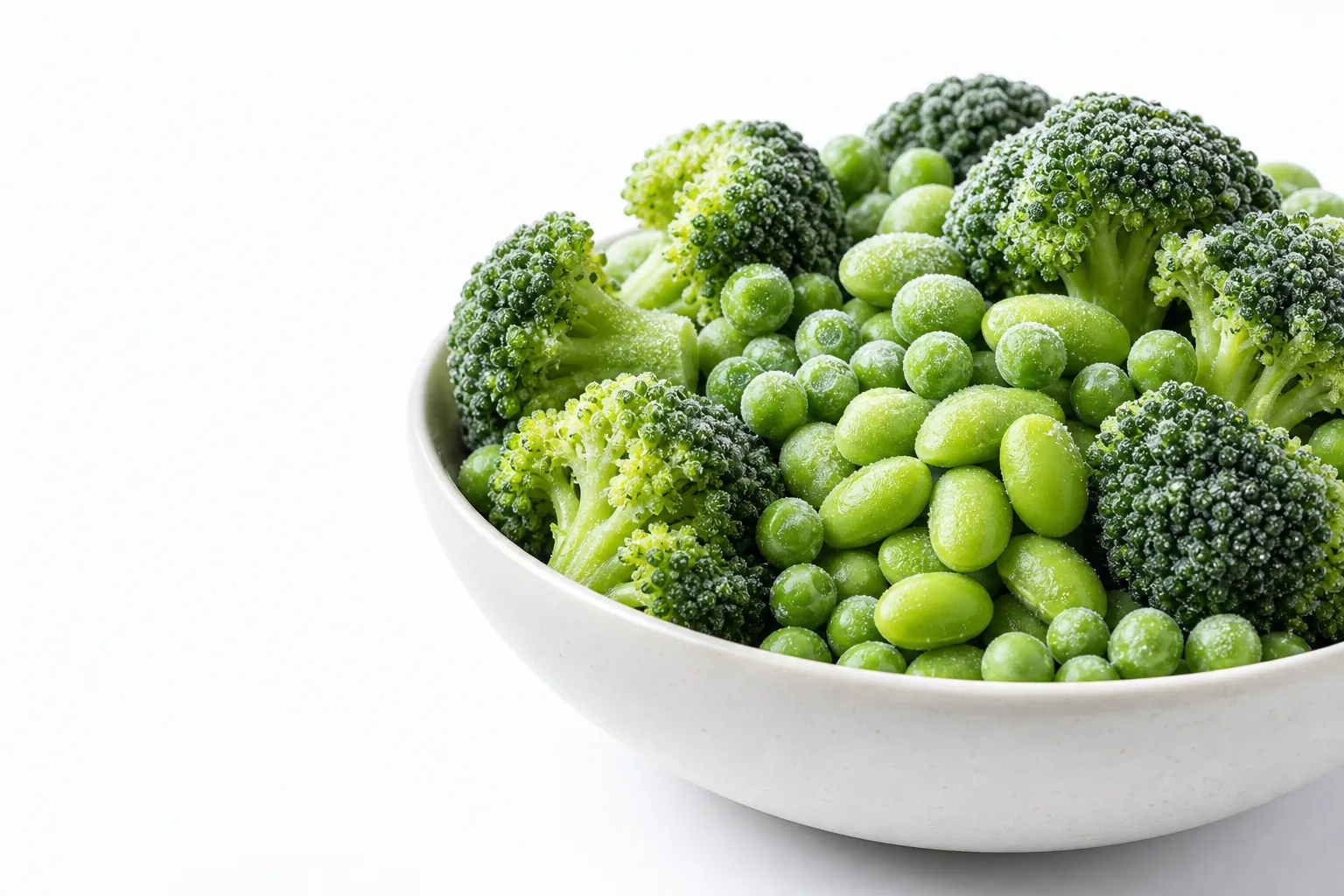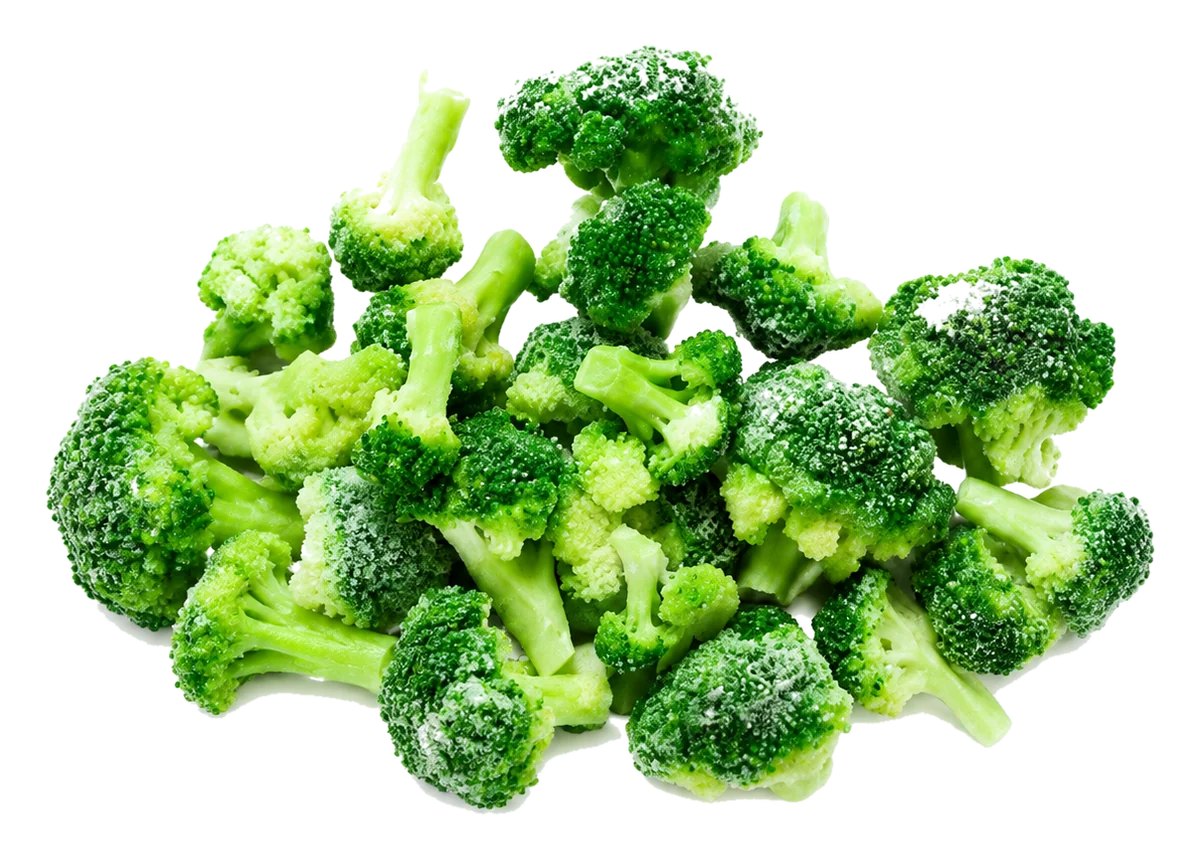
“Frozen or fresh?” sounds like a product question, but for a professional buyer it is a system question. The right format depends on the menu, manufacturing process, service model, logistics, available labour, quality target and tolerance for waste. Fresh vegetables can provide distinctive raw texture and presentation. Frozen vegetables can provide preservation, portionability and year-round operational consistency.
Evidence also resists simple nutritional rankings. Some measured nutrients remain comparable after freezing; some are affected by blanching, storage or cooking; and fresh produce changes during post-harvest distribution. A useful comparison therefore separates nutrition, sensory performance, food safety and commercial operations rather than collapsing them into one claim.
1. Start with the final application
Fresh produce has a clear advantage when the final product depends on a crisp raw bite, intact market appearance or a variety that performs poorly after freezing. Salads, crudités and premium whole-vegetable presentations often require fresh supply. Frozen vegetables are usually stronger candidates for soups, sauces, ready meals, hot sides, bakery fillings, blended products and industrial formulations where the ingredient will be cooked or further processed.
The decision can also differ within one vegetable. Fresh spinach may be appropriate for salad leaves, while frozen chopped spinach may be more practical for sauces and fillings. Fresh broccoli can suit a raw or lightly cooked presentation; calibrated IQF florets can simplify a repeatable cooked side. Procurement should begin with the sensory and process requirement, not with a category preference.
2. Nutritional comparisons require precise questions
A UC Davis study comparing refrigerated and frozen storage across eight fruits and vegetables found that most tested commodities showed no significant difference between fresh and frozen treatments for the measured minerals, fibre and total phenolics.[1] Another industrial study found cooked frozen green vegetables could retain comparable overall nutritional value to fresh counterparts when processing was well performed.[2] These findings challenge the assumption that frozen automatically means nutritionally depleted.
They do not make every frozen product equivalent. Folate research in green beans, yellow beans, peas, cauliflower, broccoli and spinach found losses that depended strongly on the vegetable, fragmentation and frozen storage duration; some products showed substantial declines during longer storage.[3] Heat-sensitive compounds can be affected by blanching, while cooking method can change the amount retained or lost into cooking water. Buyers should avoid broad front-of-pack nutrition claims unless they are supported for the specific product.
3. Freshness also has a time and temperature history
Fresh is not a single fixed state. Time since harvest, maturity, cooling, transport, humidity and retail or kitchen storage all influence quality. A local vegetable used soon after harvest is a different comparison from produce that has spent days moving through a long distribution chain. Fresh supply can deliver excellent texture and flavour, but the buyer needs the infrastructure and throughput to use it at the right point in its life.
Frozen supply captures the vegetable at a processing point and then relies on low-temperature storage. FDA guidance notes that quality can still decline during frozen storage even at -18°C, affecting colour, flavour, tenderness and other attributes.[4] The comparison is therefore not perishable versus permanent. It is one controlled deterioration pathway versus another, each with different monitoring needs.
4. Purchase price is not the same as usable cost
Fresh vegetables may require washing, peeling, trimming, cutting and defect removal. Those operations consume labour and can reduce usable yield. Frozen vegetables are often supplied prepared to a defined cut, allowing the pack to move more directly into production. This can simplify labour planning and make recipe costing more repeatable, particularly where staffing or preparation space is constrained.
Frozen products also add costs: freezer storage, energy, protected handling and sometimes longer international cold-chain logistics. Ice accumulation, breakage or unsuitable calibration can reduce value. A fair cost comparison includes delivered price, usable yield, preparation labour, pack utilisation, storage, cooking yield, disposal and service failure. The cheapest invoice line is not always the lowest-cost ingredient on the plate or production line.
5. Waste potential differs, but measurement matters
Frozen products can be held longer and portioned from a pack, which reduces the need to use an entire fresh purchase before spoilage. Research in Dutch households found that most evaluated frozen equivalents were associated with lower waste than fresh or ambient versions.[5] An Austrian survey of 2,800 households also reported much lower self-reported waste for the comparable frozen foods it examined.[6]
More recent US research using a household food-waste tracking survey found that food which had once been frozen represented a relatively small share of reported household waste and that frozen purchasing and home-freezing behaviours were associated with waste patterns.[7] These are consumer studies and include behavioural limitations. They do not provide a universal waste factor for foodservice or retail. Commercial buyers should record receiving loss, preparation loss, spoilage, plate or production waste and expired stock by format.
6. Consistency and flexibility pull in different directions
Frozen products can be contracted to defined styles and tolerances: cut length, floret diameter, whole-piece percentage, colour, defects, foreign material, blanching and pack weight. This supports consistent recipes and automated processing. Frozen blends can also combine vegetables that have different harvest windows into one stable formulation.
Fresh procurement can offer flexibility in presentation, variety and seasonal menu development. Buyers can take advantage of a short premium harvest or regional provenance that matters to customers. The trade-off is that natural size, colour and supply variation may be greater. Some businesses use both formats: fresh for signature or raw applications and frozen for high-volume cooked lines, contingency stock or off-season supply.
7. Food safety requirements differ in practice, not importance
Both formats require controlled sourcing and handling. Fresh produce may be eaten raw, making field hygiene, water quality, washing and cross-contamination controls especially important. Frozen vegetables are often cooked, but freezing itself is not a kill step. FDA states that freezing stops most bacterial growth without killing most bacteria.[4] A ready-to-cook frozen vegetable must not be presented or handled as ready to eat unless that status is validated.
The destination market, intended use and product claim should determine microbiological criteria, environmental monitoring, cooking instructions and supplier approval. For frozen imports, the buyer must also control cold-chain temperatures and assess thawing or temperature excursions. Food safety is not a point awarded to one format; it is a system that must match how the food will be consumed.
8. Build the decision with a side-by-side trial
A practical evaluation starts with matched applications. Compare fresh and frozen versions in the same recipe, batch size and equipment. Record receiving condition, storage footprint, preparation time, trim, portion accuracy, cooking yield, colour, texture, flavour, hold performance and final waste. Repeat the trial because one delivery or one cook is not enough to represent normal variation.
Then include commercial and supply factors: order minimum, lead time, shelf life, stock cover, seasonality, packaging, certification, origin requirements and contingency options. The outcome may be fresh, frozen or a dual-source strategy. The strongest decision is the one that makes the final product reliable while keeping claims honest and controls appropriate.
REFERENCES
Sources
- Bouzari, A.; Holstege, D.; Barrett, D. M. (2015). “Mineral, fiber, and total phenolic retention in eight fruits and vegetables: a comparison of refrigerated and frozen storage.” Journal of Agricultural and Food Chemistry. DOI: 10.1021/jf504890k.Open source
- Mazzeo, T. et al. (2015). “Impact of the industrial freezing process on selected vegetables—Part II: Colour and bioactive compounds.” Food Research International. DOI: 10.1016/j.foodres.2015.05.036.Open source
- Czarnowska, M.; Gujska, E. (2012). “Effect of freezing technology and storage conditions on folate content in selected vegetables.” Plant Foods for Human Nutrition. DOI: 10.1007/s11130-012-0312-2.Open source
- U.S. Food and Drug Administration (accessed 2026). “Are You Storing Food Safely?.” FDA Consumer Update.Open source
- Janssen, A. M. et al. (2017). “Fresh, frozen, or ambient food equivalents and their impact on food waste generation in Dutch households.” Waste Management. DOI: 10.1016/j.wasman.2017.05.010.Open source
- Martindale, W. (2017). “The impact of food preservation on food waste.” British Food Journal. DOI: 10.1108/BFJ-02-2017-0114.Open source
- Xu, L.; Li, R.; Roe, B. (2024). “Frozen food purchasing and home freezing of fresh foods: associations with household food waste.” British Food Journal. DOI: 10.1108/BFJ-02-2024-0147.Open source
This article is written for professional food buyers and does not provide individual nutrition, medical or legal advice.