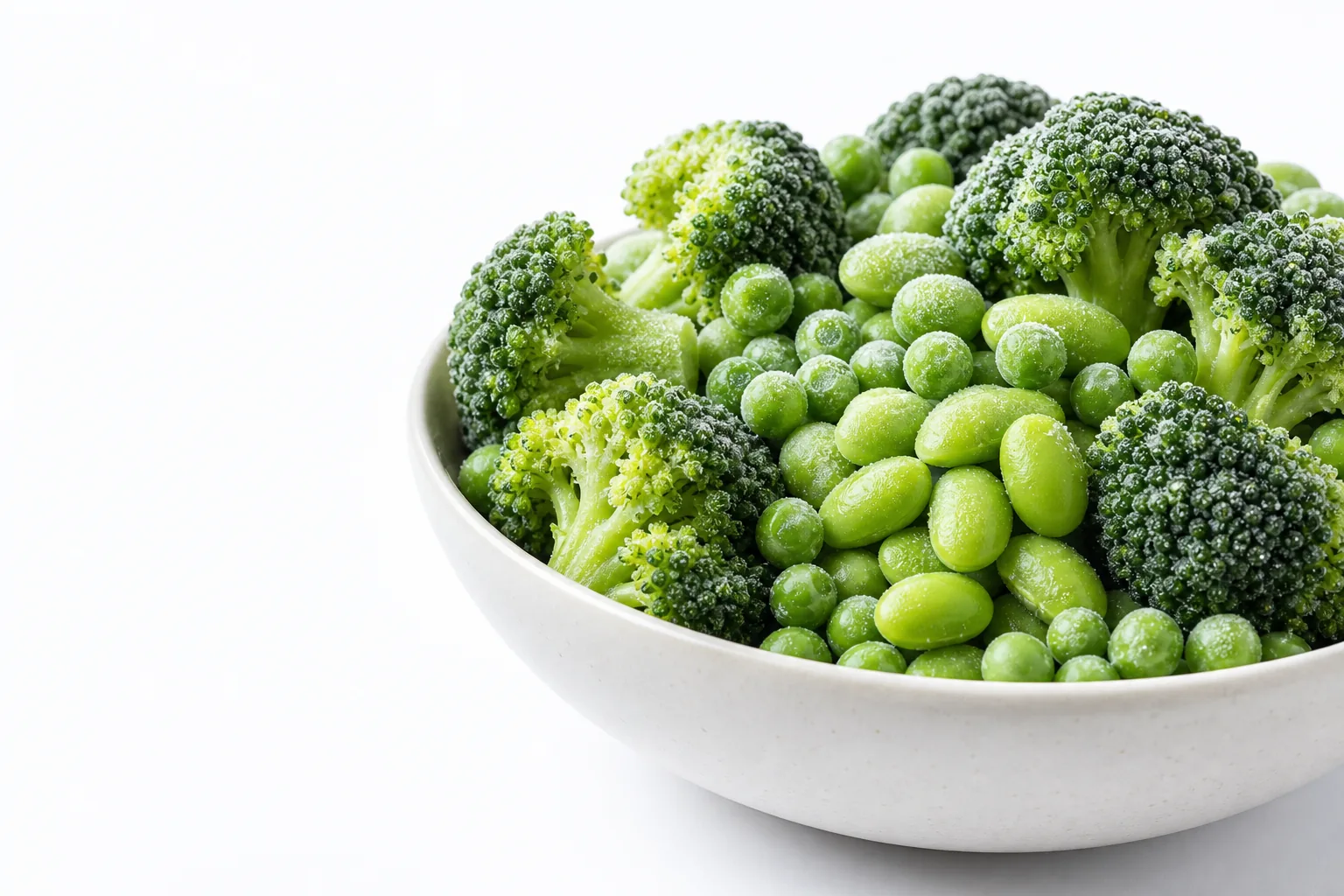
Green beans and vegetable blends need different controls. A green bean brief centres on variety, cut and piece quality; a blend also needs a locked recipe, component ratios and rules for normal variation.
Market data can indicate category activity, but it does not replace a product-level demand forecast. Buyers should use their application, channel and customer requirements to set the specification.
1. Define the product architecture
For green beans, state whole, cut or sliced format, target length or calibration, colour, fibre expectations and acceptable broken pieces. For blends, list every component, percentage and cut so the sampled recipe can be reproduced.
Avoid vague descriptions such as “standard mixed vegetables.” Two blends with the same ingredients may perform differently when ratios, piece sizes or blanching conditions differ.
2. Test the intended application
Explain whether the product is for retail, foodservice, soup, ready meals or industrial repacking. Evaluate colour, texture, separation and cook performance using the buyer's real process.
Codex quick-frozen vegetable guidance provides a reference for frozen preparation and condition, while buyer-agreed specifications establish the tolerances needed for the actual program.[1]
3. Prepare destination and pack information
Provide destination port, pack size, case configuration, label language, volume and required timing. Identify any importer-defined checks or documents that need to be confirmed during qualification.
Do not treat a generic certification list as proof that every site and product is covered. Confirm the selected manufacturing partner, scope and validity before contracting.
REFERENCES
Sources
- Codex Alimentarius Commission (2015; amended 2022). “Standard for Quick Frozen Vegetables, CXS 320-2015.” FAO/WHO.Open source
This article is written for professional food buyers and does not provide individual nutrition, medical or legal advice.